How to Improve Your Eye as a Photographer
One of the most frustrating stages in a photographer’s journey is when your images are technically fine: the exposure is correct and the focus is sharp, but they still feel visually flat. It is easy to look at experienced photographers and wonder how they instantly spot incredible frames in everyday scenes that others walk right past.
Training your eye has very little to do with your camera gear or the software you use. Instead, it is about learning how to build a photo deliberately and see the world with genuine intent. If you want to push past average snapshots and start creating impactful images, here are a few practical, real-world strategies to sharpen your photographic vision.
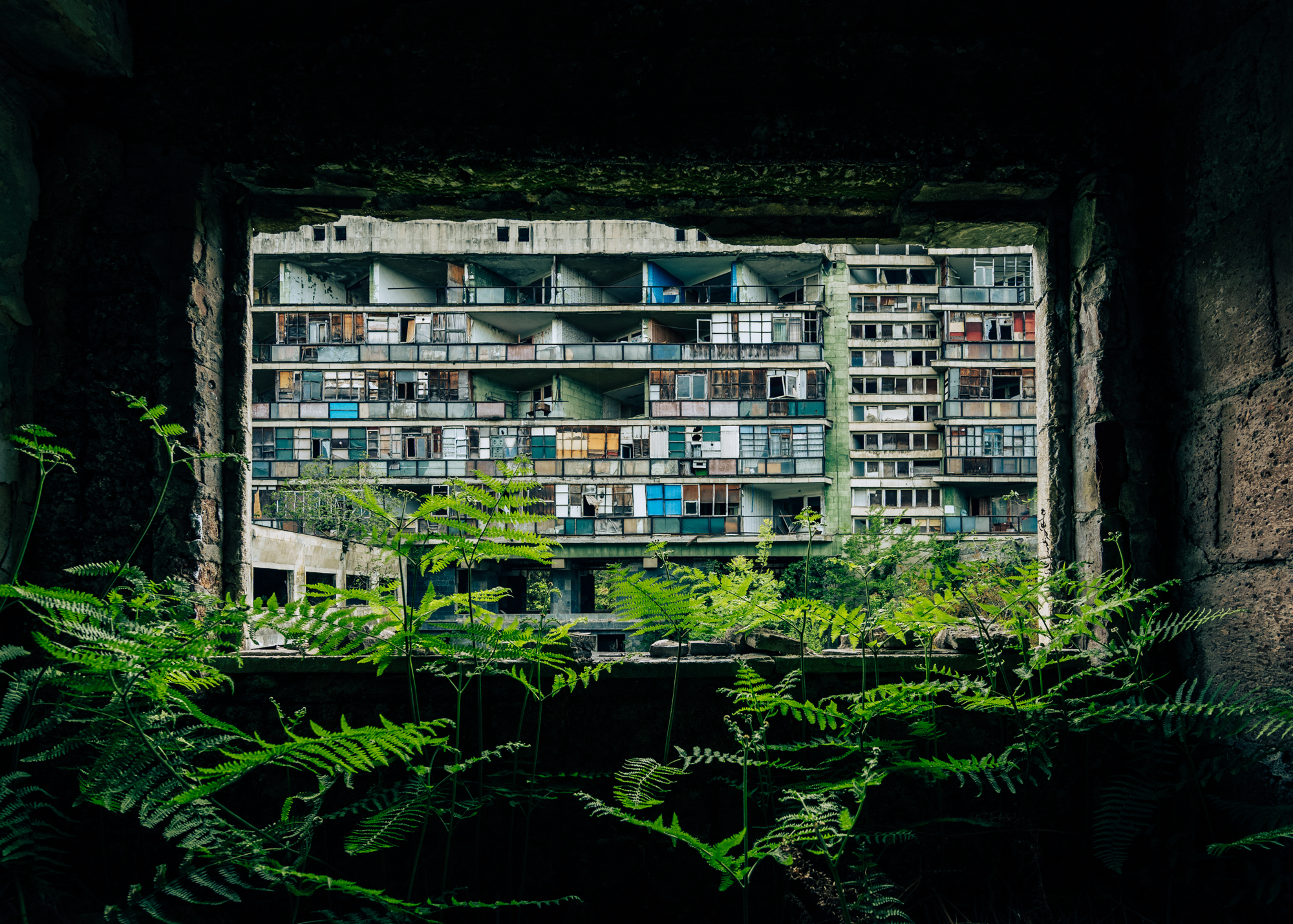
Visual Addition & Subtraction
A great way to approach a scene is to treat composition like a simple mathematical equation of addition, subtraction, and reduction.
-
Add with Purpose: Don’t just stand still. Move your physical position to deliberately bring elements into your frame that help guide the viewer and tell a clearer story.
-
Subtract the Noise: Shift your angle or step closer to eliminate messy backgrounds, trees, wires, signage, or any distracting elements that pull attention away from your main subject.
-
Reduce to Prime Factors: Keep stripping the scene down until only the absolute most essential components are left visible. If an element isn’t actively adding to the image, it is taking away from it.
Step Outside of Photography for Inspiration
To build a timeless eye for composition, look beyond modern photography platforms and social media feeds, which can sometimes lead to derivative habits. Instead, study older, classic visual mediums:
-
Classical Paintings: Visit a museum or look through art history books. Study how Renaissance masters like Caravaggio meticulously structured their foregrounds, mid-grounds, and backgrounds, and note how they used light and shadow to create depth.
-
Cinematography: Watch great films with a critical eye. Observe how a cinematographer can use a single, static frame to establish a mood, convey tension, or tell a complete story without moving the camera.
Practical Exercises to Train Your Brain
Like any muscle, your visual eye requires specific, conscious exercises to grow stronger. Try incorporating these techniques into your next few practice walks:
-
Switch to a Single Prime Lens: Zoom lenses can make us lazy. Forcing yourself to shoot exclusively with a fixed focal length, like a 35mm or 50mm, completely changes how you perceive space. It forces you to move your body, interact with the environment, and naturally learn exactly how elements will arrange themselves within that specific field of view.
-
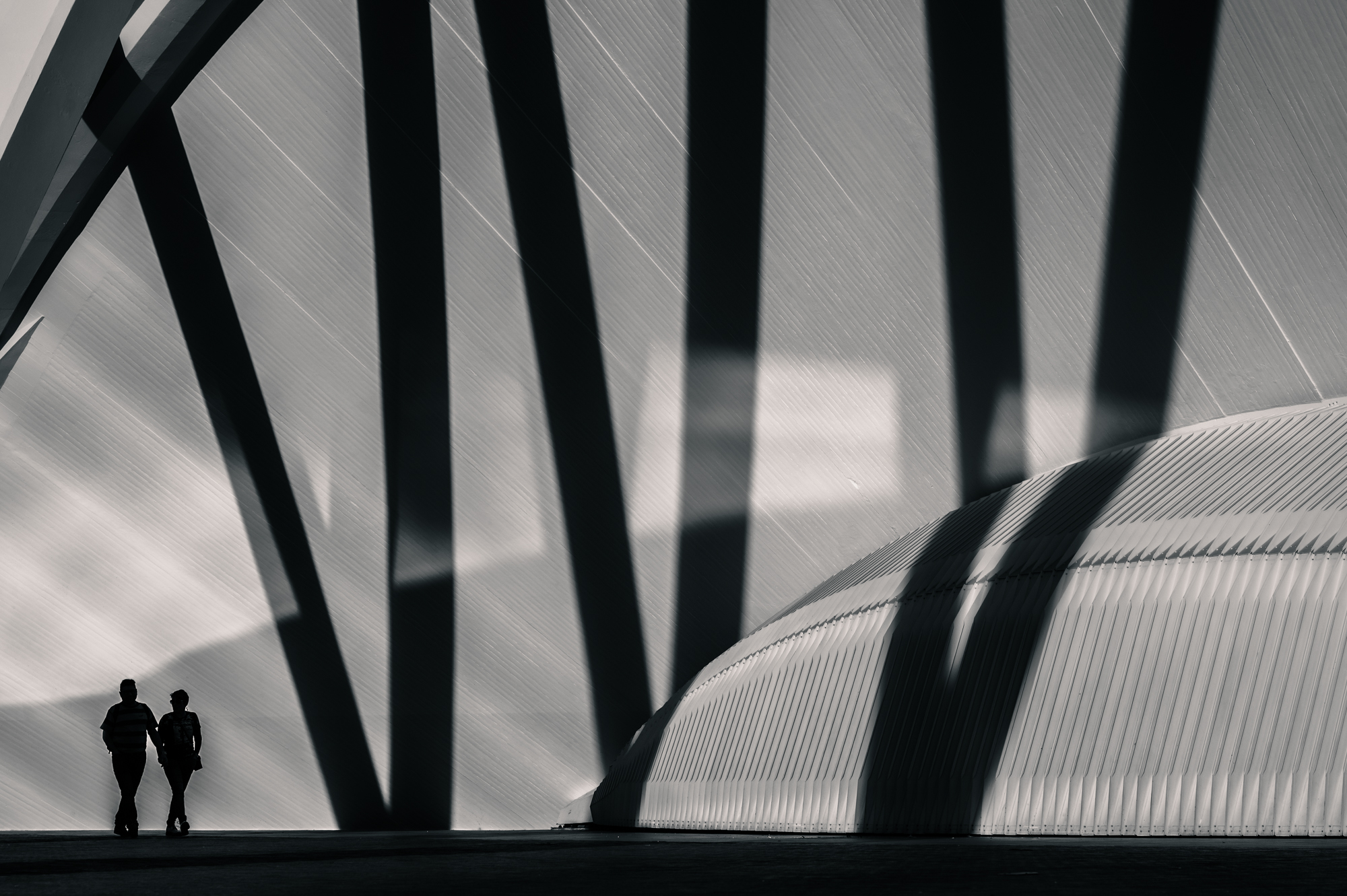
Look at the Shadows instead of the Light: Human beings are naturally wired to look at where the light falls. Try reversing this behavior by forcing your brain to look strictly at the shapes and geometries created by shadows. It shifts your focus toward abstract balance and form.
-
The Blur Test: A truly strong composition holds its balance even if you blur the image entirely. When looking at a potential scene, squint your eyes or look past the specific details to focus purely on the rough shapes, heavy edges, and overall silhouettes. If the layout looks balanced as a blur, it will look balanced as a photograph.
Keep the In-Camera Workflow Simple
It is easy to get caught up in the trap of relying on heavy editing to “save” an uninspired photo later. To improve your eye faster, shift your energy toward getting the image right the moment you press the shutter.
A good middle ground is to set your camera to capture both RAW and JPEG files simultaneously. Use the high-quality JPEG processing straight out of the camera to study your immediate results on composition, angles, and natural lighting. Keep your post-processing simple and efficient, using presets to handle basic corrections rather than rewriting the image from scratch. When editing becomes a quick tool to realise the vision you already imagined, rather than a rescue mission, you know your eye is doing the heavy lifting.
Review and Critique Your Work
The final step in training your eye happens when you review your images. Developing a critical eye requires learning how to objectively critique your own work.
-
Look for Distracting Elements: When reviewing your images on a larger screen, look closely at the edges of the frame. Notice if there is any wasted space, accidental camera tilts, or subtle background distractions that you completely missed while shooting.
-
Identify the Story: Ask yourself honestly if the photo has a clear point. If you have included people or objects in the scene, do they add to a narrative, or are they simply taking up space in the frame?
-
Separate the Photo from the Memory: It helps to put your images away and look at them again days or weeks later. Divorcing your eye from the actual experience of taking the picture allows you to judge the final image strictly on its visual merits rather than how you felt in the moment.
Taking the photo is only half the process; spending the time to diagnose why a shot works, and exactly why it doesn’t, is what builds long-term improvement.
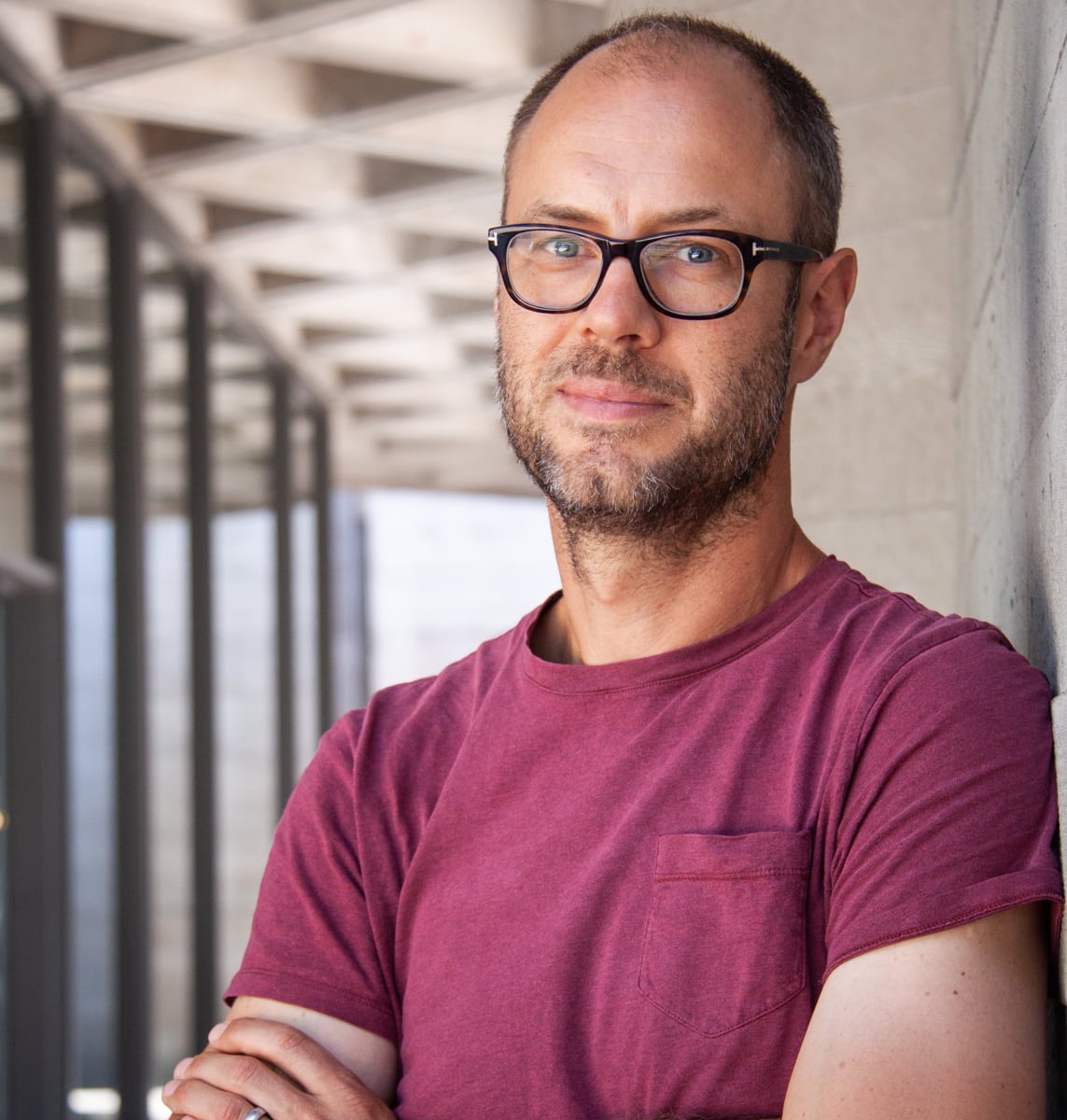
Andrew Mason is a professional photographer and the founder of the 36exp Photographers School plus the London Photo Show.
He shoots mainly commercial portraits for a living, and likes to shoot landscape, portrait and travel photography.
He is a master of lighting and portrait photography, plus leads photography trips with 36exp.